INPI
Quick coupling with three safety locks
Developed in-house by Acoplin and filed with the Brazilian patent office (INPI) in 2013 as a utility model. When it was filed, every coupling on the market worked with two safety locks.
What the application describes
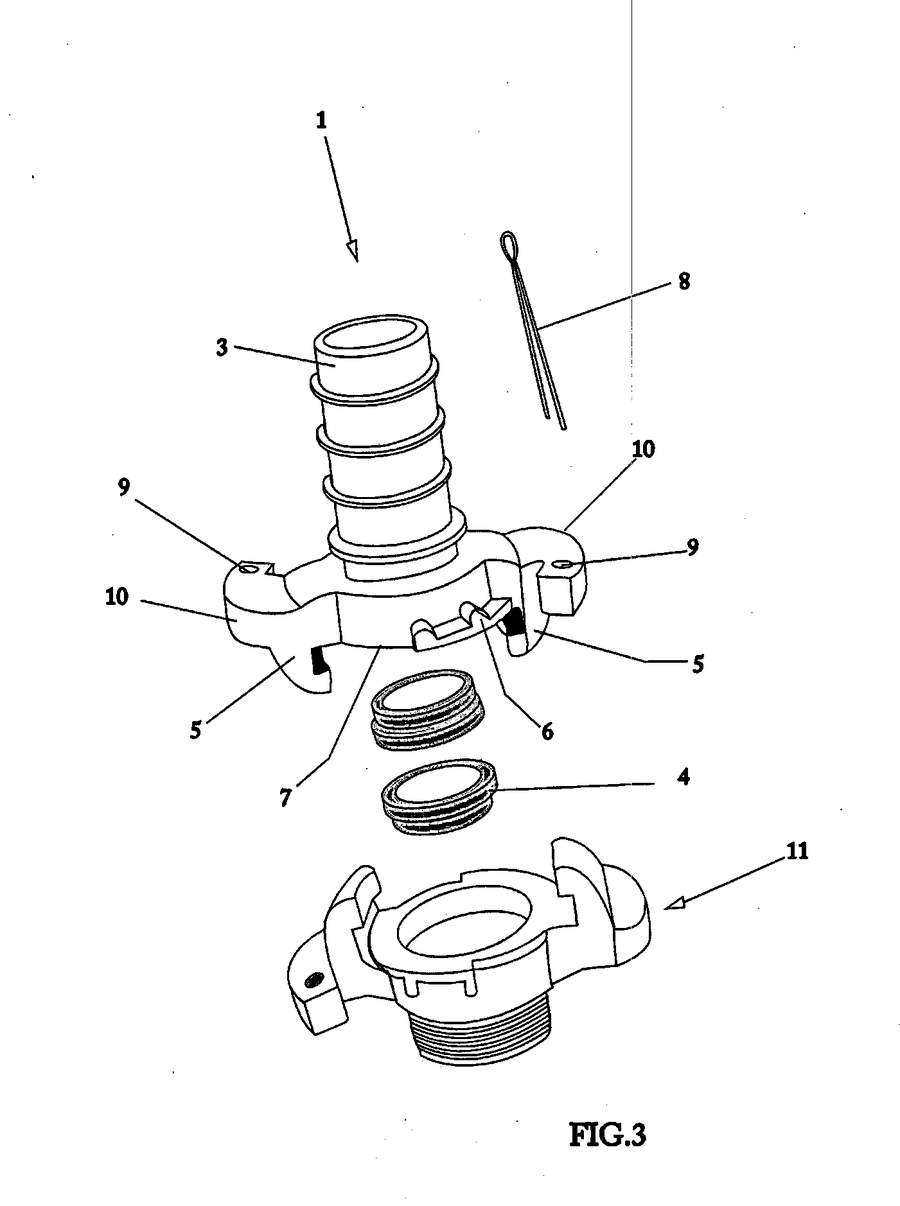
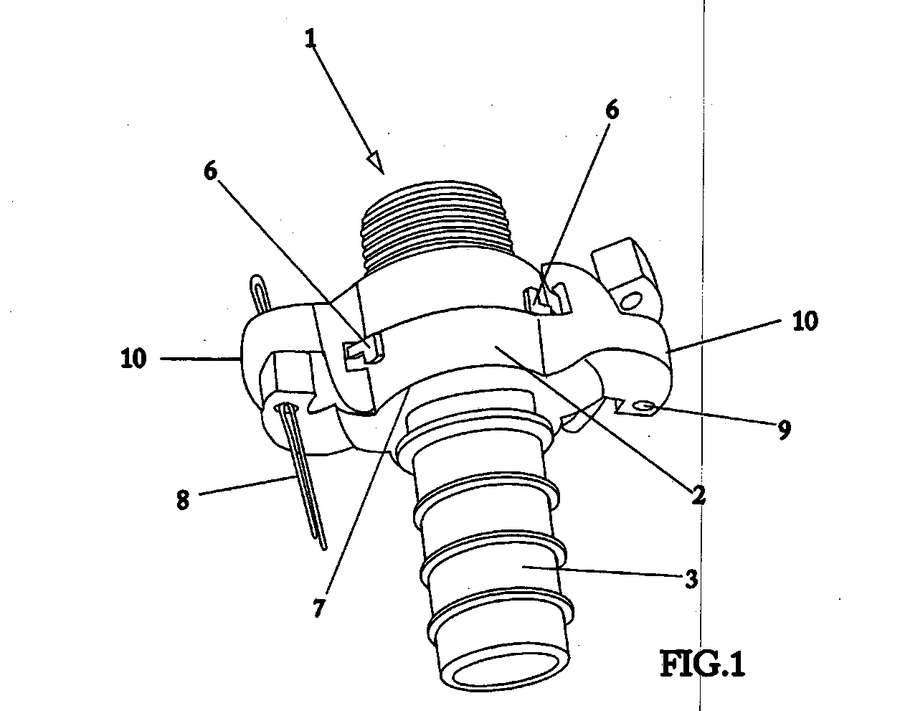
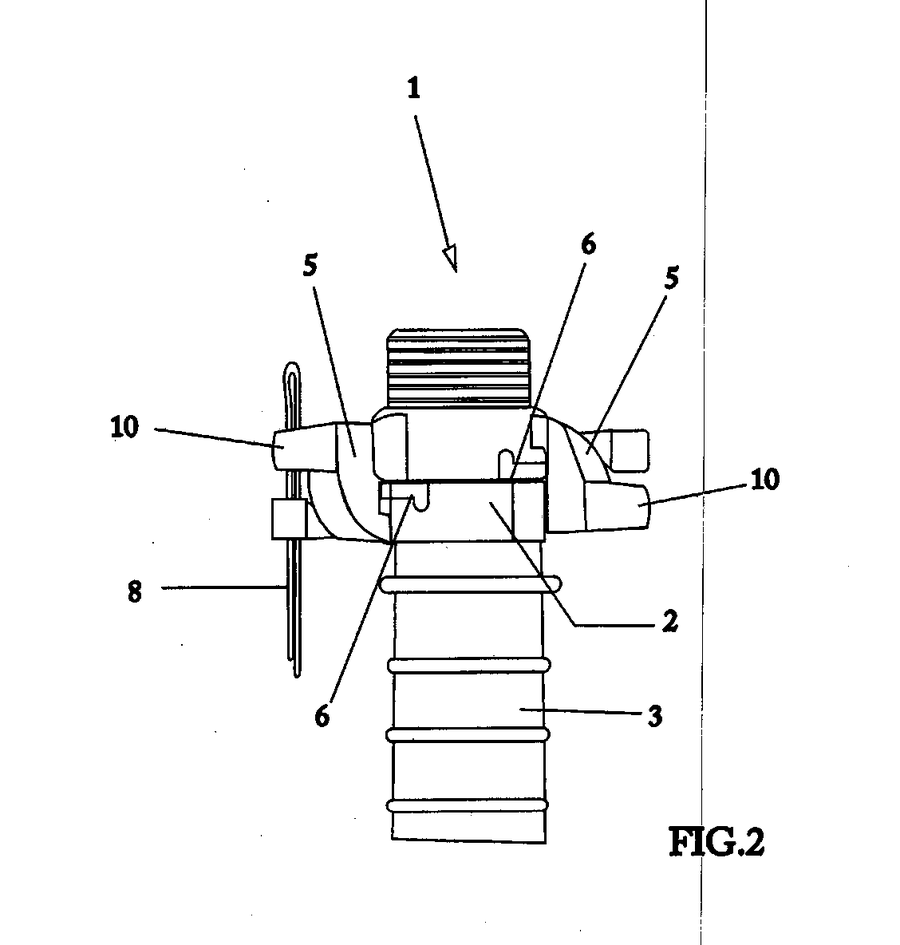
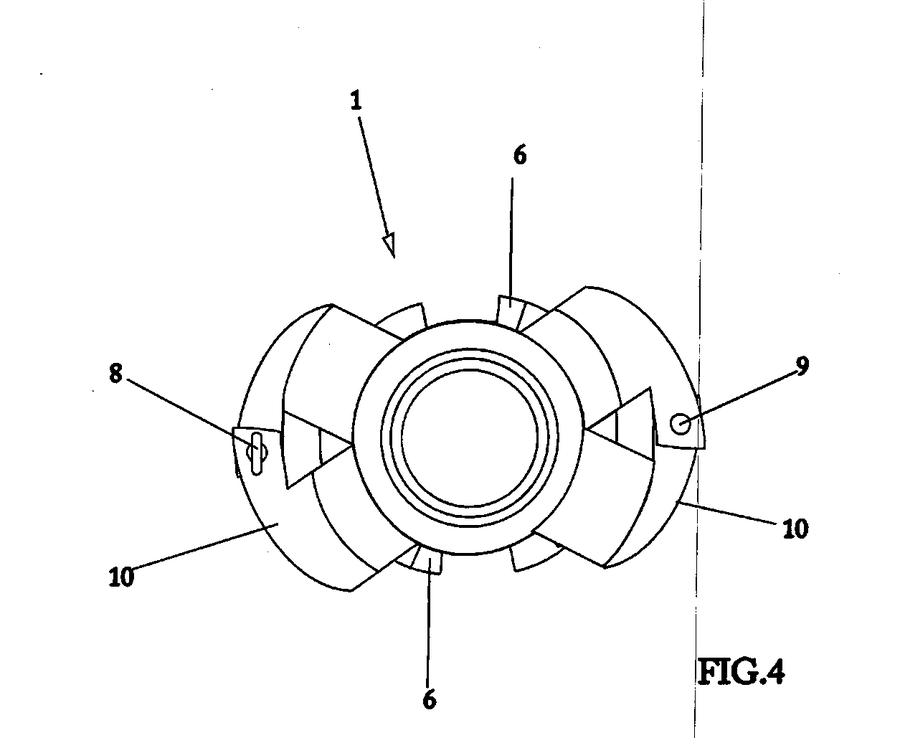
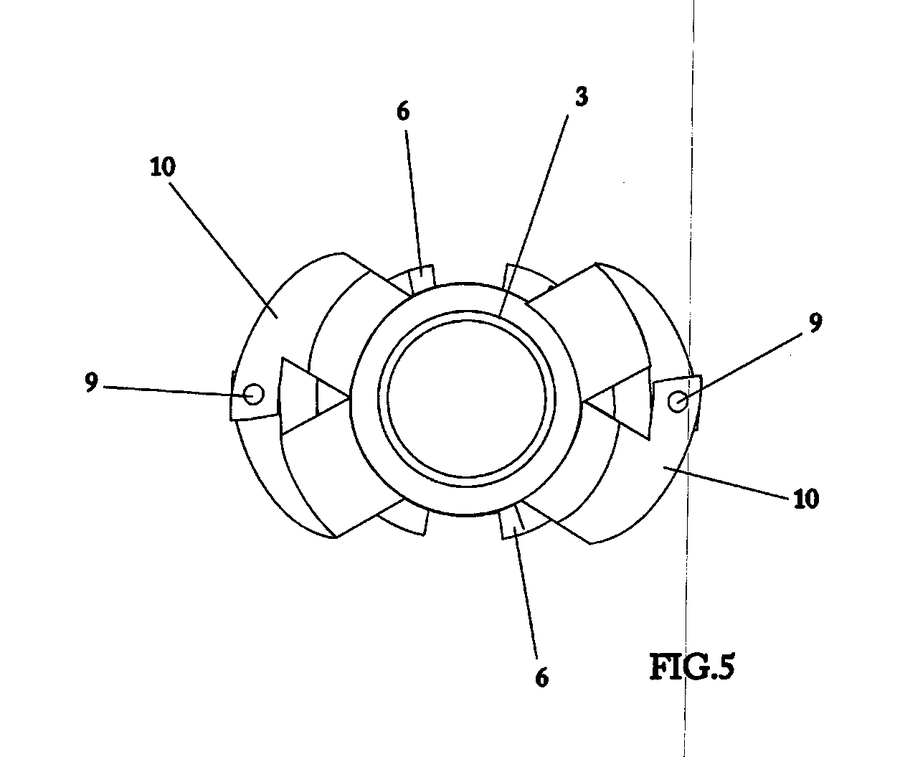
The two upper bodies of the coupling are identical and engage each other with a slight clockwise turn. The locking happens during that turn, and each lock does a different job:
The flanges (5)
Integral to the upper body, they guide the engagement and carry the mechanical load of the joint.
The ridges on the perimeter edge (6 and 7)
As the coupling is turned, the ridges of one body cross the ridges of the other and hold. This lock comes from the act of coupling itself, with no loose part to forget.
The steel pin (8)
Inserted through the holes (9) in each outer flange (10), it is what fully secures the two bodies together.
The report also records the repetition: the three locks repeat on the opposite side of the coupling and on the coupling at the other end of the hose or valve. It is not one extra lock at one point, it is a locking set at every joint in the line.
Filing data
| Type | Utility model patent |
|---|---|
| Title | Technical arrangement introduced in a quick coupling with safety locks |
| Filed | 5 December 2013 |
| Application published | 18 August 2015 |
| Granted | 9 April 2019 |
| Holder | Acoplin |
| Inventor | Thiago Rodrigues Garofalo |
| International class | A62C 33/00 (fire-fighting equipment) |
Drawings filed with the application
Field of application
The field declared in the document covers mining, hydroelectric plants, civil construction and steel mills, as well as site security, fire brigades and offshore platforms. The purpose stated is the linear coupling of high-pressure hoses, quickly and with full safety.
Material and finish
Carbon steel, stainless steel or malleable steel, always surface treated, with yellow zinc plating as the preferred finish. The internal sealing ring is made of nitrile rubber (NBR).